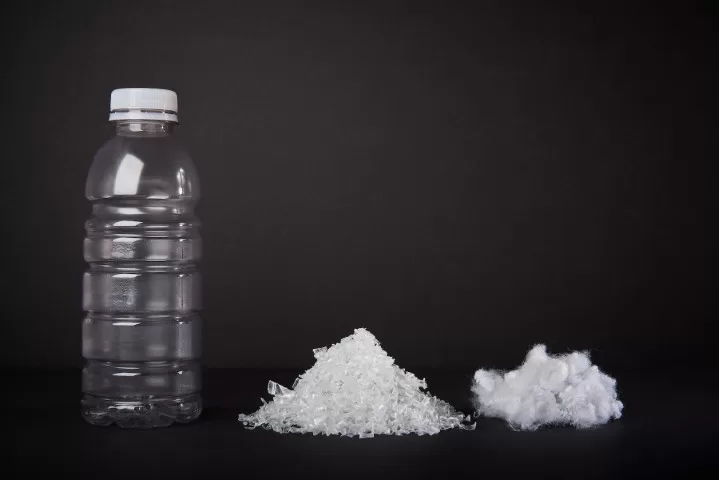
In today’s world of growing environmental awareness, recycling plays a critical role in building a more sustainable future. One of the most commonly recycled materials is #1 PET plastic. We usually see PET used in products like plastic water bottles or other food and beverage containers. This versatile material can be given a second life through an advanced recycling process that transforms discarded bottles into valuable fibers used in a wide range of eco-friendly products. In this way, plastics like PET can contribute towards sustainability by being reused, rather than ending up in landfills or in the environment as waste.
In this article, we’ll walk through the step-by-step process of how #1 PET recycling works: from bottle to flake to fiber. We’ll also explore how Cellulose Material Solutions (CMS) utilizes recycled PET fibers to create high-performing sustainable packaging and acoustical insulation products.
What is #1 PET?
PET, or polyethylene terephthalate, is a type of plastic commonly used in packaging for food and beverages because it is lightweight, durable, transparent, and helps protect product integrity. We recognize PET in our day-to-day being used most often for products like plastic water or pop bottles. PET is safe for consumer use and is accepted in most curbside recycling programs. In fact, it is the most recyclable and most recycled plastic in the United States. PET itself can be recycled and reused almost endlessly without diminishing its properties, making it an exceptionally valuable material.
The plastic itself isn’t necessarily a sustainability villain…we as people are when we throw it away or discard it in the natural environment instead of recycling it. If people widely recycled PET bottles and containers, it could contribute a lot more to sustainable initiatives than people realize! Many companies, like CMS, utilize recycled PET to create new products—eliminating the need for new plastics, while also helping to mitigate plastic waste in our world.
Step 1: Collection & Sorting
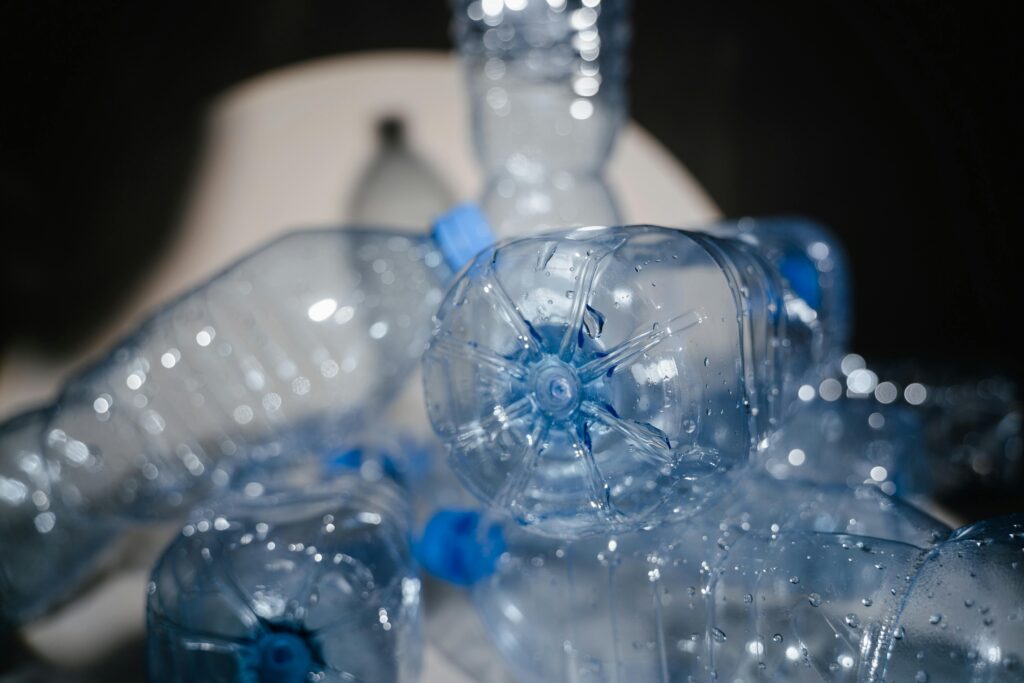
The PET recycling journey begins with consumer participation in recycling initiatives. Used PET bottles are collected through means of curbside recycling, drop-off centers, or deposit-return programs. Once collected, materials are then transported to material recovery facilities (MRFs). Here they are sorted using automatic systems, or sometimes by hand, in order to separate PET from other plastics and contaminants. This separation from other plastics is important, because the presence of non-PET plastic would contaminate the PET recycling process, limiting its quality for reuse, which only hinders efficiency and contributes further to waste. Once all of the PET has been properly sorted, this valuable material makes its way to the next step in the recycling process.
Step 2: Washing & Shredding
After sorting, the PET containers are sent to a processing facility. Here the bottles are then separated into their respective color streams before they’re ground up and shredded into small plastic pieces, often referred to as flakes. After being turned into flakes, the PET is then thoroughly washed to remove labels, adhesives, lids, rings, and other contaminants. From there, the flakes make their way to a high-temperature decontamination section where any post-consumer substances—such as leftover liquid—are removed and cleaned from the material. This step is critical because impurities can affect the quality of the final product!
Step 3: Flake Processing & Extrusion
These clean PET flakes undergo additional refining, including hot washing and chemical treatment, to ensure a high-purity level. These now refined flakes can then be melted and extruded into fibers through a high-temperature spinning process. This converts the plastic into fine threads, or filaments, which can be further processed into fiber materials.

Step 4: Fiber Manufacturing
Once in fiber form, the recycled PET (rPET) can be carded, crimped, and cut into desired sizes and textures depending on the intended application. These fibers are now ready to be transformed into products ranging from clothing and carpeting to insulation and packaging.
Turning Recycled PET into Sustainable Products
CMS is an industry leader in sustainable product innovation, and they’re harnessing the power of recycled PET fibers to help build a greener future.
Sustainable Packaging
CMS transforms rPET fibers into InfinityCore thermal and protective packaging solutions that are high-performing and eco-friendly. InfinityCore packaging serves as an ideal choice for industries seeking sustainable alternatives to EPS foam and other non-sustainable options—as InfinityCore is not only sourced from recycled materials, but is also recyclable after use.
As an added benefit, CMS offers a variety of product customization, because the best packaging is that which is made directly for your application. Because of this, InfinityCore thermal liners and InfinityCore Protective packaging is guaranteed to meet your needs, while simultaneously helping you reduce your environmental impact.
Acoustical Products
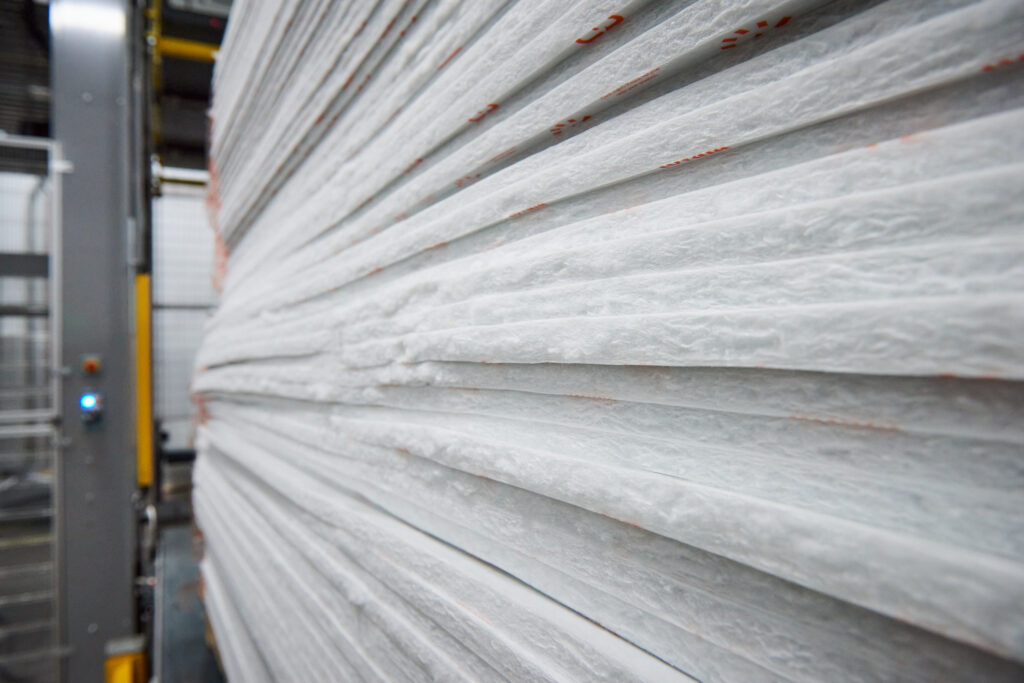
In addition to packaging, CMS also produces acoustical products like panels, blankets, and Polyester Core, which are all made utilizing recycled PET fibers. These products are lightweight, versatile, and highly effective at helping to control sound, making them ideal for use in a variety of applications.
By utilizing post-consumer PET materials, CMS creates acoustical products that not only improve indoor environments but also contribute to the circular economy.
Why PET Recycling Matters
Recycling #1 PET is about more than just waste reduction: it’s about creating new value from used materials. Each bottle recycled and turned into fiber helps conserve resources, reduce energy use, limit greenhouse gas emissions, and eliminate plastic waste.
By supporting companies like CMS, consumers and businesses alike can help close the loop, ensuring that yesterday’s bottles become tomorrow’s sustainable solutions.
Interested in sustainable packaging or acoustical solutions made from recycled PET? Browse the CMS website to explore our full range of products and discover how we’re redefining green innovation—one fiber at a time.